
Step-by-Step Brew Guide
Professional barista-level instructions for every major coffee drink — based on SCA, WBC and World AeroPress Championship standards. Click any drink to expand.
Espresso
Ristretto
Americano
Cappuccino
Latte
Flat White
Cortado
Mocha
Macchiato
Pour Over / V60
French Press
AeroPress
Moka Pot
Chemex
Cold Brew
☕ Espresso-Based Drinks
☕ Espresso
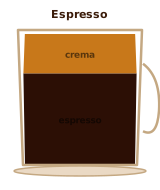
Layer diagram
Dose
18–20g
Yield
36–40g
Ratio
1:2
Water temp
90–93°C
Pressure
9 bar
Extraction
25–30 sec
1
Flush the group head for 2–3 seconds to purge stale water and stabilise temperature. This is non-negotiable — stale water ruins flavour.
2
Dose and distribute: Grind 18–20g into the portafilter. Use a WDT tool (Weiss Distribution Technique) — a thin needle stirred through the puck — to break up clumps and ensure even distribution. Level with your finger or a distribution tool.
3
Tamp evenly at 15–20kg pressure. Keep the tamper level — tilt causes channelling. Aim for a polished, flat puck. Do not twist after tamping.
4
Lock in and brew immediately. Start your timer. Target 36–40g output in 25–30 seconds. A digital scale under the cup is the most accurate way to hit ratio.
5
Assess the shot: Good espresso flows like warm honey — not watery, not dripping. Crema should be dark hazelnut to tiger-stripe. Taste: balanced sweet-bitter-sour, no harsh bitterness.
💡 Barista tip: If extraction is under 25 sec, grind finer. Over 30 sec, grind coarser. Change grind in small increments — 1 click at a time. Temperature affects taste: hotter = more body, cooler = more acidity. Light roasts need 92–94°C.
⚠️ Common mistakes: Uneven tamp (channelling), stale beans, wrong dose, not flushing group head, not preheating the cup.
Source: SCA Brewing Standards · World Barista Championship rules · Barista Institute Espresso Fundamentals
☕ Ristretto
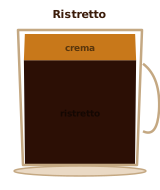
Layer diagram
Dose
18–20g
Yield
18–22g
Ratio
1:1
Water temp
90–93°C
Extraction
15–20 sec
1
Follow espresso prep steps 1–3 exactly (flush, dose, distribute, tamp).
2
Stop the shot at 18–22g output — half the volume of a regular espresso. Use a scale. Stop by cutting the pump, not by lifting the portafilter.
3
Adjust grind finer than your espresso setting — same dose, less water means higher resistance needed to keep 15–20 sec extraction time.
💡 Barista tip: Ristretto tastes sweeter and less bitter than espresso because the early fraction of extraction contains more sweetness compounds. The Flat White is classically made on a double ristretto base for this reason.
Source: SCA · World Barista Championship specifications
☕ Americano
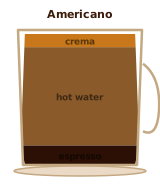
Layer diagram
Espresso
Double shot
Hot water
120–180ml
Water temp
90–96°C
Cup size
180–240ml
1
Pull a double espresso (36–40g) into a pre-heated cup.
2
Add hot water — espresso first, then water. This preserves the crema on top. Ratio is roughly 1:3 espresso to water (adjust to taste).
3
Do not stir unless the customer requests it — the layered look is part of the presentation.
💡 Barista tip: Always add water AFTER espresso — adding espresso to water (a "Long Black") keeps the crema intact and produces a different, bolder flavour. A true Long Black is common in Australia/NZ.
Source: SCA · Barista Institute
☕ Cappuccino
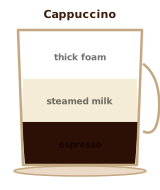
Layer diagram
Espresso
Double shot
Milk
100–120ml
Milk temp
60–65°C
Cup size
150–180ml
Foam
1–2cm thick
1
Pull a double espresso into a pre-heated 150–180ml cup.
2
Steam cold milk (4°C) to 60–65°C. Keep the steam wand tip just below the surface — angle the jug to create a whirlpool. Introduce air at the start (lower the jug slightly — you should hear a paper-tearing hiss) then submerge to heat. Stop at 65°C max.
3
Tap and swirl the jug firmly on the counter to pop large bubbles. Swirl until the milk looks glossy and paint-like.
4
Pour immediately. Tilt the cup at 45°. Pour through the crema in a steady stream, then gently rock the jug to lay the foam on top. Target: thick microfoam with 1–2cm foam layer.
💡 Barista tip: A traditional Italian cappuccino is drier (more foam, less liquid milk). A modern "wet" cappuccino is closer to a small latte. SCA specifies at least 1cm foam. Cold milk steams better — don't use milk that's been sitting out.
⚠️ Common mistakes: Steaming too hot (above 68°C burns proteins), over-aerating (bubbly foam not microfoam), not tapping/swirling before pour.
Source: SCA Barista Skills Program · Barista Institute Milk Science
☕ Latte / Café Latte
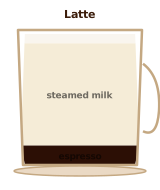
Layer diagram
Espresso
Double shot
Milk
220–280ml
Milk temp
60–65°C
Cup size
280–350ml
Foam
5mm layer
1
Pull a double espresso into a pre-heated 280–350ml glass or cup.
2
Steam milk to 60–65°C with minimal aeration — a latte needs silky microfoam, not thick froth. Introduce only a small amount of air at the start (1–2 seconds of surface hiss).
3
Tap, swirl, pour. Start the pour from height to mix through the espresso, then lower the jug to bring foam to the surface. A latte is the base canvas for latte art.
4
For latte art: When the cup is ¾ full, lower the jug tip to the milk surface, slow the pour and wiggle the jug side to side to form a heart or rosette.
💡 Barista tip: The difference between a latte and cappuccino is foam depth — latte has ~5mm, cappuccino has 1–2cm. For latte art to work the milk must be perfectly smooth (like white paint) with no visible bubbles.
Source: SCA Brewing Standards · World Latte Art Championship criteria
☕ Flat White
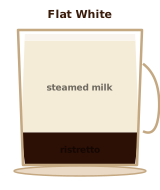
Layer diagram
Base
Double ristretto
Milk
100–130ml
Milk temp
55–62°C
Cup size
150–165ml
Foam
<5mm
1
Pull a double ristretto (1:1 ratio, ~20g in / 20g out). The ristretto base gives the flat white its distinctive sweeter, less bitter flavour vs a latte.
2
Steam a smaller volume of milk (100–130ml) to only 55–62°C — cooler than a latte. Use a smaller jug if available. Create very fine, velvety microfoam with almost no visible foam layer.
3
Pour all the milk in — the flat white is a high ratio drink, so the espresso flavour should be prominent through the milk.
💡 Barista tip: The flat white is stronger than a latte because it uses the same espresso dose in a smaller cup. The ristretto base and lower milk temperature are what distinguish it — if you just pour less milk into a latte, it's not a flat white.
Source: SCA · Barista Institute · Australian/NZ specialty coffee tradition
☕ Cortado
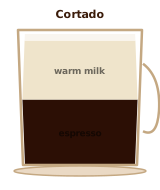
Layer diagram
Espresso
Double shot
Milk
~60ml
Ratio
1:1
Milk temp
55–60°C
Cup size
90–120ml
1
Pull a double espresso (~60ml output) into a small glass or Gibraltar glass.
2
Steam equal volume of milk (~60ml) to 55–60°C with minimal foam — the cortado is about balance, not froth.
3
Pour gently over the espresso. No latte art needed — this is a simple, balanced drink. Serve immediately in the glass it was made in.
💡 Barista tip: "Cortar" means "to cut" in Spanish — the milk cuts the acidity of the espresso without diluting it like an Americano. Serve at table within 30 seconds or the layers blend.
Source: Barista Institute · Spanish coffee tradition
☕ Mocha
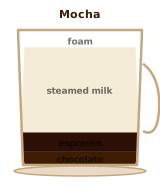
Layer diagram
Espresso
Double shot
Chocolate
15–20g sauce
Milk
180–220ml
Milk temp
60–65°C
1
Add 15–20g of quality chocolate sauce or syrup to the base of a pre-heated cup. Use dark chocolate (70%+) for a professional result — avoid flavoured syrups where possible.
2
Pull a double espresso directly over the chocolate. Stir vigorously to combine — this emulsifies the chocolate with the espresso.
3
Steam milk to 60–65°C with light foam (similar to a latte). Pour over the espresso-chocolate base.
4
Optionally dust with cocoa powder or add whipped cream for a café-style finish.
💡 Barista tip: Stirring the chocolate with the hot espresso is the key step — if you skip this and just pour milk on top, you get a separated, uneven drink. Quality chocolate makes a significant flavour difference.
Source: Barista Institute · SCA
☕ Macchiato (Espresso & Latte)
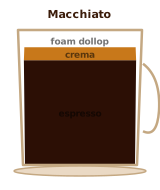
Layer diagram
Espresso macro
Double + 15ml foam
Latte macro
Double + 150ml milk
1
Espresso Macchiato: Pull a double espresso. Add a small dollop (15ml) of steamed foam on top. "Macchiato" means "stained" — the foam just marks the espresso.
2
Latte Macchiato: Steam 150ml milk to 65°C. Pour into a tall glass first. Then slowly pour a shot of espresso through the foam — it sinks through and layers between the foam and milk.
💡 Barista tip: A latte macchiato and a latte are made from the same ingredients but opposite order — milk first, then espresso. The slow pour and temperature difference creates the visible layer.
Source: SCA · Italian coffee tradition
⚗️ Filter & Manual Brew Methods
⚗️ Pour Over / V60
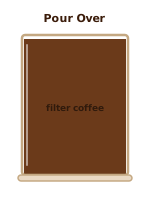
Layer diagram
Coffee
15g
Water
250g
Ratio
1:16.5
Water temp
92–96°C
Grind
Medium-fine
Total time
3:00–3:30
1
Rinse the filter with hot water — this removes paper taste and pre-heats the dripper. Discard rinse water.
2
Add 15g of medium-fine ground coffee. Shake the dripper gently to level the bed.
3
Bloom: At 0:00, pour 30–45g of water (2–3× coffee weight) in a slow spiral from centre outward. Wait 30–45 seconds for CO₂ to degas — you'll see the bed bubble and rise.
4
Pour in stages: At 0:45, pour to 150g total. At 1:30, pour to 250g. Each pour should be slow and concentric — avoid pouring on the filter walls.
5
Draw-down should complete by 3:00–3:30. If faster, grind finer. If slower, grind coarser. The bed should be flat with no obvious channels.
💡 Barista tip (James Hoffmann V60 method): Use a 40g bloom, wait 45 sec, then pour continuously in slow circles to 250g, finishing by 3:00–3:30. Swirl the dripper gently after each pour to keep the bed flat. Light roast Ethiopian beans at 96°C reveal extraordinary floral complexity.
⚠️ Common mistakes: Skipping the bloom, pouring too fast (increases TDS unevenly), pouring on the filter walls (bypasses the coffee bed), old or unevenly ground beans.
Source: SCA Golden Cup Standard · James Hoffmann, "The World Atlas of Coffee" · Hario V60 brew guide
🫙 French Press
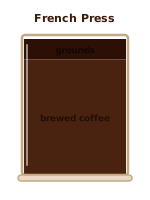
Layer diagram
Coffee
30g
Water
500ml
Ratio
1:16
Water temp
93–96°C
Grind
Coarse
Steep time
4 minutes
1
Preheat the French press with hot water, swirl, discard.
2
Add 30g coarsely ground coffee. Coarse grind is critical — fine grinds over-extract and clog the filter.
3
At 0:00, pour all 500ml of water at 93–96°C. Stir gently once to ensure all grounds are wet. Place lid on (plunger up) but do not press.
4
At 4:00, press slowly and steadily — take 20–30 seconds to plunge. Pressing too fast causes turbulence and pushes fines through the filter.
5
Pour immediately — do not leave coffee sitting on the grounds or it will over-extract and become bitter.
💡 Barista tip (Hoffmann method): After 4 minutes, break the crust, scoop off the foam and floating grounds, wait 4 more minutes, then gently pour without pressing the plunger at all. This produces a cleaner cup with less sediment.
Source: SCA · James Hoffmann French Press method · Barista Institute
🟡 AeroPress
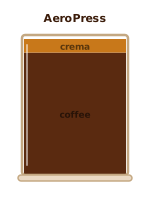
Layer diagram
Coffee
15–17g
Water
220–250ml
Water temp
80–94°C
Grind
Medium-fine
Total time
1:30–2:30
1
Rinse the paper filter and assemble the AeroPress in standard (upright) position on a sturdy mug.
2
Add 15–17g of medium-fine grounds. Level the bed.
3
Pour 220–250ml of water (80–94°C) — lower temperature works well with medium/dark roasts, higher with light roasts. Fill to the top.
4
Stir gently for 10 seconds. Insert the plunger and press steadily over 20–30 seconds. Stop when you hear the first hiss of air.
💡 Inverted method: Flip the AeroPress upside down (plunger in first), add grounds and water, steep for 60–90 seconds, stir, attach filter cap, flip over a cup, press. This gives more control over steep time and is preferred by World AeroPress Championship competitors.
Source: AeroPress Inc. · World AeroPress Championship recipes · SCA
🔥 Moka Pot
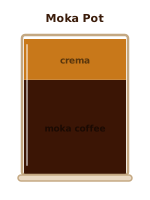
Layer diagram
Coffee
Fill basket
Water
Below valve
Grind
Medium-fine
Heat
Medium-low
1
Fill the lower chamber with hot water up to just below the safety valve. Using pre-boiled water reduces bitterness by limiting contact time on the stovetop.
2
Fill the filter basket with medium-fine ground coffee. Level with your finger — do not tamp. Overfilling or tamping blocks the water flow.
3
Screw together firmly and place on medium-low heat with the lid open.
4
Watch carefully. When coffee begins to flow into the upper chamber, reduce heat to low. When you hear a sputtering/gurgling sound, remove from heat immediately and run the base under cold water to stop extraction.
💡 Barista tip: The gurgling sound means all water has passed through — continuing to heat burns the coffee. Pre-boiling the water (Bialetti's own tip) gives better flavour. Use medium-dark or dark roast beans for best results.
Source: Bialetti official guide · SCA · Barista Institute
🔷 Chemex
Layer diagram
Coffee
42g
Water
700ml
Ratio
1:16.5
Water temp
94–96°C
Grind
Medium-coarse
Total time
4:00–5:00
1
Fold and rinse the Chemex filter — the thick bonded filters need thorough rinsing (3-fold side facing the spout). Discard rinse water.
2
Add 42g of medium-coarse grounds. Chemex uses a coarser grind than V60 due to its thicker filter.
3
Bloom: Pour 80–90g water in a spiral. Wait 45 seconds.
4
Pour in 3 stages: pour to 350g, wait for drawdown to drop, pour to 525g, wait, pour to 700g. Each pour concentric, slow and steady.
5
Total drawdown should complete by 4:00–5:00. Remove the filter before it's fully drained to avoid paper taste at the end.
💡 Barista tip: The Chemex's thick filter removes more oils than a V60, producing a very clean, bright, tea-like cup. It's ideal for light roast single origins where floral/fruit clarity is the goal. Less forgiving of grind inconsistency than V60.
Source: Chemex official brewing guide · SCA · James Hoffmann
🧊 Cold Brew
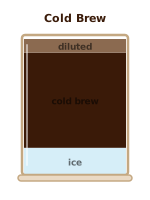
Layer diagram
Coffee
100g
Water
800ml cold
Ratio
1:8 (concentrate)
Water temp
4°C (fridge)
Grind
Very coarse
Steep time
12–24 hrs
1
Grind 100g very coarsely — like coarse sea salt. Fine grinds over-extract in cold brew and produce bitterness.
2
Combine coffee and cold water in a large jar or Toddy system. Stir to ensure all grounds are saturated.
3
Cover and refrigerate for 12–24 hours. 12 hours = lighter, 18 hours = balanced (recommended), 24 hours = strong/concentrated. Room temperature steeps finish faster (8–12 hrs) but have shorter shelf life.
4
Strain twice: first through a coarse mesh, then through a paper filter or fine cloth. This produces a clear, sediment-free concentrate.
5
To serve: Dilute concentrate 1:1 with cold water or milk over ice. Keeps refrigerated for up to 2 weeks.
💡 Barista tip: Cold brew has up to 2× the caffeine of hot coffee per fl oz because of the high concentrate ratio. Medium or dark roast beans work best — light roasts can taste sour in cold brew. Brazilian or Sumatran beans are ideal for their low acidity and chocolate notes.
Source: SCA · Toddy official brewing guide · Barista Institute Cold Brew Standards